Dentures in Nottingham: The Complete Patient Guide
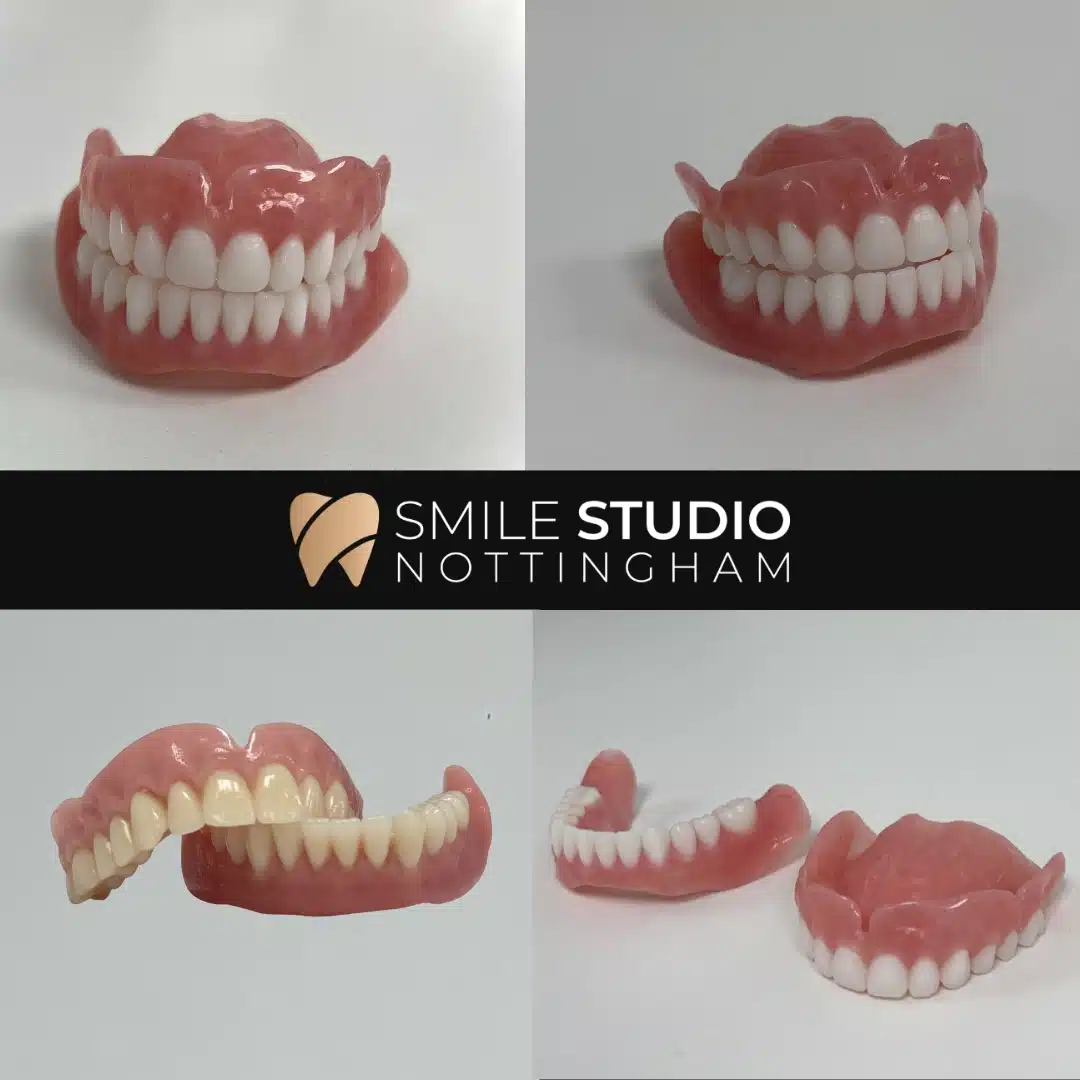
Compare full, partial, flexible, chrome, suction and implant-retained dentures, including costs, appointments, risks, aftercare and NHS availability.
What are dentures?
For patients searching for dentures in Nottingham, the right question is not simply “which material is best?” It is “which design is most appropriate for my mouth, bite, remaining teeth, dexterity, expectations and budget?” Smile Studio assesses and adjusts dentures at its Arnold practice with support from an on-site laboratory.
Denture types compared
| Option | Usually suited to | Key strengths | Limitations | Published Smile Studio price |
|---|---|---|---|---|
| Full acrylic denture | All teeth missing in one arch | Cost-effective, adjustable, supports facial profile | Lower dentures may move more; gums and bone change over time | Assessment required |
| Partial acrylic denture | One or more missing teeth | Adaptable and often lower initial cost | Can feel bulkier than metal designs | £600–£1,200, depending on size/tier |
| Flexible partial denture | Selected partial-denture cases | Discreet clasps, metal-free appearance | Not ideal for every bite; can be harder to modify | £1,300 |
| Chrome denture | Patients with suitable supporting teeth | Thin, rigid and strong | Requires carefully assessed teeth and design | Confirm after consultation |
| Suction denture | Selected full-denture cases | Designed to maximise seal and control | Suitability depends on anatomy and tissue condition | £2,600 |
| Implant-retained denture | Loose conventional dentures or greater stability needs | Improved retention and confidence | Surgery, healing, maintenance and higher cost | From £2,000 |
Prices are based on the practice pricing pages available when this article was reviewed and may change. A written treatment plan should confirm the final fee.
What happens at a denture consultation?
Clinical examination
The dentist checks the gums, soft tissues, jaw relationship, bite, remaining teeth and any current denture. Areas of soreness, instability, wear and repeated fracture are investigated rather than simply copied into a new appliance.
Records and investigations
Records may include photographs, impressions or digital scans, bite measurements and shade selection. X-rays may be advised if remaining teeth, retained roots, pain or bone condition need assessment. Not every denture patient requires every test.
Your priorities
Expect questions about eating, speech, appearance, gagging, previous denture experience, hand dexterity and whether you prefer removable or implant-supported options.
Written plan
You should leave understanding the proposed type, likely number of visits, costs, alternatives, limitations and expected maintenance. Ask what is included if adjustments are required.
Step-by-step denture treatment process
Assessment and stabilisation
Active decay, gum disease, painful teeth or unsuitable roots may need treatment first. Immediate dentures can sometimes be planned around extractions.
Primary impressions or scans
Initial records capture the broad shape of the mouth. A custom tray and more detailed impression may follow where precision is required.
Bite registration
The clinician records how the jaws meet, the desired tooth height, facial support and midline. This stage strongly affects speech, appearance and chewing.
Try-in
Wax trial dentures may be used to check tooth position, shade, smile line and bite before the appliance is finished. Changes are easier at this stage.
Fit and adjustments
The final denture is fitted and checked for pressure areas, retention, speech and bite. Follow-up adjustments are common because the mouth must adapt.
Typical number of appointments: often 4 to 6 for a conventional new denture, although immediate dentures, repairs and more complex designs vary.
What to expect after fitting
A new denture may feel large or unfamiliar at first. Saliva, speech and chewing usually settle with practice. Begin with softer foods cut into small pieces, chew on both sides and avoid testing the denture immediately with hard, sticky or very chewy foods.
- Expect a learning period rather than instant natural-tooth function.
- Do not tolerate a sharp pressure point. Arrange an adjustment.
- Remove dentures at night unless your clinician advises otherwise.
- Clean the gums, tongue and any natural teeth twice daily.
Potential problems patients should know about
Soreness and rubbing
Pressure areas are common during adaptation and usually need adjustment. Persistent ulceration should be examined.
Movement and looseness
Retention varies with anatomy, saliva, muscle control and bone changes. Lower full dentures are commonly more challenging.
Speech and taste changes
Some patients notice temporary speech changes or altered sensation of taste, particularly with an upper plate.
Wear and fracture
Denture teeth wear and bases can crack. Repeated breaks may indicate a bite or fit problem rather than bad luck.
Oral infection
Poor cleaning or continuous overnight wear can contribute to inflammation and fungal infection.
Ongoing jaw change
Gums and jawbone continue to change after tooth loss, so a denture may need relining or replacement even if it is undamaged.
Smile Studio denture case gallery
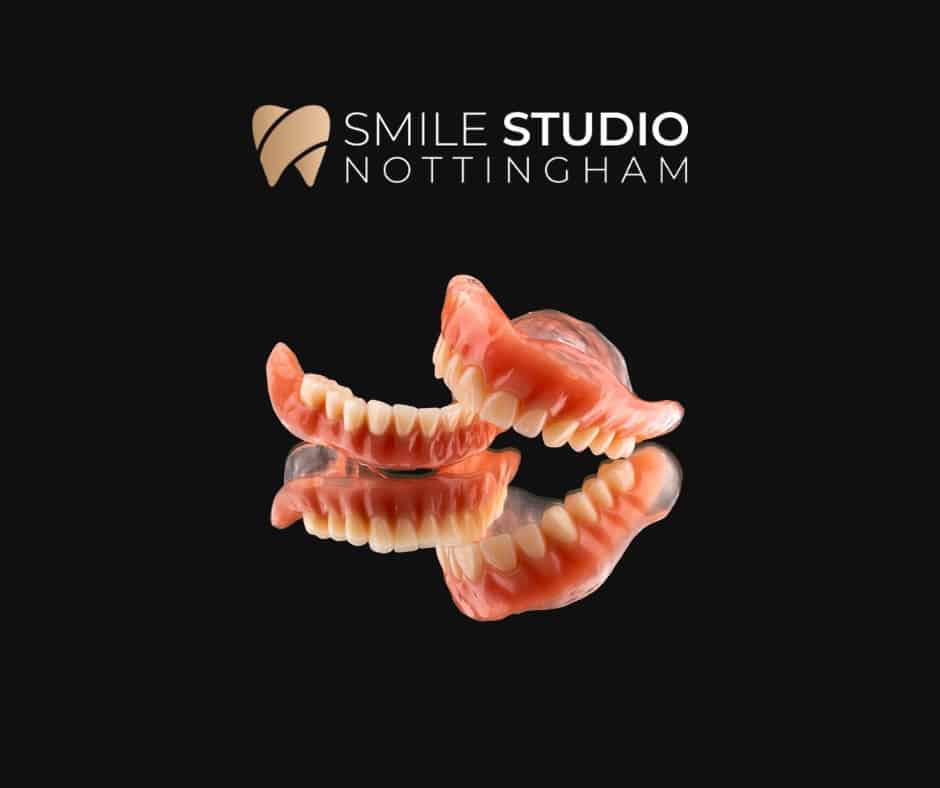
This image is from Smile Studio’s published practice gallery. It demonstrates the type of visual change that may be possible with carefully designed dentures. Individual diagnosis, appointment count and outcome details are not published, so they are not invented here. Results vary and a consultation is required.
Clinical review point: a denture should be assessed for bite, facial support, speech, cleanability and patient control, not appearance alone.
Proposed reviewer: Julija Hobotova, Principal Dentist. Approval required before publication.Private costs, finance and NHS dentures
Smile Studio is a private practice. Published denture fees include acrylic dentures from £600, flexible partial dentures at £1,300, suction dentures at £2,600, relines at £275 for dentures made by the practice and implant-retained dentures from £2,000. Costs can increase where extractions, X-rays, hygiene treatment, temporary dentures or implants are required.
Dentures can be available through NHS dentistry when clinically necessary. The design and material offered depend on clinical need and NHS provision. Private treatment may offer different materials, laboratory stages, appointment time or aesthetic choices. Ask any provider to explain both the clinical differences and the total fee in writing.
Smile Studio advertises 0% finance for 12 months, subject to status and terms. See the practice finance options and current dental fees.
Common denture myths
| Myth | Reality |
|---|---|
| “The most expensive denture will never move.” | Material and laboratory quality matter, but anatomy, fit, saliva, bite and muscle control still affect retention. |
| “You do not need dental check-ups if you have no teeth.” | The gums, soft tissues, jaw and denture fit still need review. |
| “Denture adhesive fixes a poor fit.” | Adhesive can help selected patients but should not mask pain, damage or significant looseness. |
| “All broken dentures can simply be glued.” | Household glue can contaminate or distort the denture and make professional repair harder. |
Denture terms explained
- Arch
- The curved row of teeth in the upper or lower jaw.
- Reline
- Adding material to the fitting surface to improve adaptation to changed gums.
- Immediate denture
- A denture fitted at or soon after tooth extraction.
- Retention
- How well a denture resists lifting or movement away from the gums.
- Occlusion
- The way the upper and lower teeth meet.
Key takeaways
- The best denture is the best-designed option for your specific mouth, not automatically the costliest material.
- Expect multiple appointments for accurate records, a try-in and final fitting.
- Adjustment visits are normal, but persistent pain is not.
- Clean the denture and mouth daily, remove it overnight unless advised otherwise and attend reviews.
- Implants may improve stability but add surgery, cost and maintenance.
Frequently asked questions
How long does it take to get dentures in Nottingham?
A conventional new denture often requires 4 to 6 appointments spread over several weeks. Immediate dentures, repairs and complex cases vary.
Can I eat normally with new dentures?
Most people need an adaptation period. Start with softer foods, small pieces and balanced chewing before gradually reintroducing firmer foods.
Are dentures painful?
Dentures should not remain painful. Temporary pressure spots can occur after fitting and should be professionally adjusted.
How long do dentures last?
They can last several years, but fit and function change as the mouth and jaw alter. Reviews, relines or replacement may be needed.
Can I get dentures on the NHS?
Clinically necessary dentures are generally available through NHS dentistry, subject to access and the treating dentist’s assessment. Private options may offer different materials or choices.
What is the best denture for a lower jaw?
It depends on anatomy and expectations. Conventional, suction and implant-retained designs may be considered after examination.
Related Smile Studio treatments and guides
Sources used for this guide
- NHS: Dentures
- NHS: Dental treatments and NHS availability
- NHS: Services available on the NHS
- Smile Studio: Dentures in Arnold, Nottingham
- Smile Studio: Pricing
External links are provided for general patient information. They do not replace advice from a dentist who has examined you.
Get a personalised assessment in Nottingham.
Smile Studio is at 152-156 Front Street, Arnold, Nottingham, NG5 7EG, with an on-site dental laboratory and Saturday appointments.