Dentures vs Dental Implants in Nottingham: An Honest Comparison
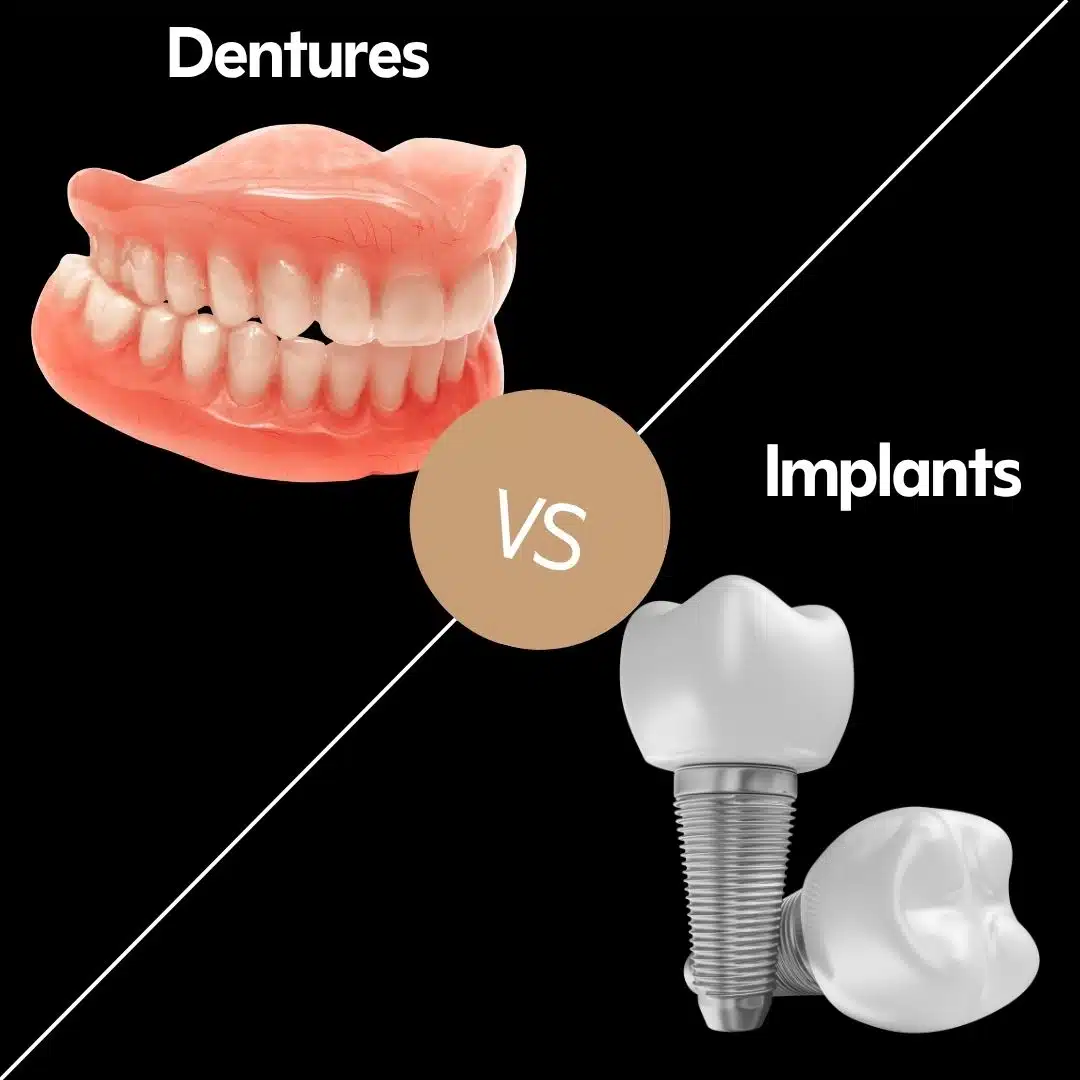
Compare dentures and dental implants for cost, comfort, surgery, appointments, eating, lifespan, maintenance and NHS availability in Nottingham.
Dentures or implants: which is better?
Dentures versus dental implants comparison
| Factor | Dentures | Dental implants |
|---|---|---|
| Procedure | Non-surgical unless extractions are needed | Surgical placement into jawbone |
| Appointments | Often 4 to 6 for a new conventional denture | Several visits across months |
| Stability | Varies with anatomy, fit and muscle control | Usually stronger retention once integrated |
| Removability | Removed for cleaning | Crowns and bridges fixed; overdentures removable |
| Bone requirements | Can often be made despite bone loss | Adequate bone required; grafting may be needed |
| Initial cost | Generally lower | Generally higher |
| Maintenance | Relines, repairs and eventual replacement | Daily cleaning, reviews and component repair |
| NHS access | Commonly available if clinically necessary | Rare, limited priority circumstances |
What happens during the decision-making consultation?
The dentist should assess the teeth, gums, bite, medical history, smoking, dexterity, expectations and budget. Implant consideration may require X-rays, digital scans and CBCT imaging. A good consultation also considers keeping spaces, bridges, adhesive bridges, tooth-supported overdentures and no treatment.
Dentures may suit you when
- You want a removable, non-surgical option.
- Bone volume or health makes implants less suitable.
- You need to replace many teeth at a lower initial cost.
- You value easier modification if more teeth are lost.
Implants may suit you when
- You want greater stability or fixed teeth.
- Your mouth and health are suitable for surgery.
- You can commit to cleaning, reviews and higher cost.
- A bridge would otherwise require preparing healthy teeth.
Treatment timeline comparison
| Stage | Denture pathway | Implant pathway |
|---|---|---|
| Assessment | Examination, impressions or scans, bite | Examination, X-rays, scans and often CBCT |
| Active treatment | Try-in, processing, fitting | Surgery, possible graft, healing |
| Final teeth | Often within weeks | Often after 3 or more months, sometimes longer |
| Adaptation | Speech and eating practice, adjustments | Surgical recovery then adaptation to restoration |
Risks and limitations compared
Denture limitations
Movement, rubbing, speech adaptation, reduced chewing efficiency, fracture and progressive looseness as the jaw changes.
Implant limitations
Surgical complications, failure to integrate, infection, nerve or sinus risk, grafting, longer treatment, higher cost and mechanical maintenance.

The middle option: implant-retained dentures
An implant-retained overdenture combines a removable denture with implants that improve retention. It can offer more confidence than a conventional lower denture while remaining removable for cleaning. Attachments wear and need periodic replacement, and the implants require meticulous hygiene.
Cost, finance and NHS availability
Smile Studio lists acrylic dentures from £600, flexible partial dentures at £1,160 and suction dentures at £2,600. Implant-retained dentures are from £2,000, a single implant and crown from £1,950, and a 3-unit implant bridge at £3,950. Final fees depend on scans, extractions, grafting, provisional teeth and complexity.
Dentures are usually available through NHS dentistry when clinically necessary. Dental implants are usually private and only rarely funded for high-priority circumstances. Finance can spread private costs, subject to terms.
Myths that distort the choice
| Myth | Reality |
|---|---|
| Implants are always better | They may be unsuitable because of health, bone, cost or maintenance ability. |
| Dentures always look false | Well-designed dentures can look natural and restore facial support. |
| Implants are maintenance-free | They require daily cleaning and long-term professional care. |
| Dentures are the quickest option in every case | Extractions and healing can complicate timing, although conventional denture fabrication is usually faster than implants. |
Key takeaways
- Choose based on health, anatomy, lifestyle and maintenance, not marketing.
- Dentures are usually faster, removable and less costly initially.
- Implants are more stable but involve surgery and months of treatment.
- Implant-retained dentures bridge the gap between both options.
- Ask for a written comparison and total cost before deciding.
Frequently asked questions
Are implants better than dentures for eating?
Implants usually provide stronger retention, but outcomes depend on the restoration, bite and individual case. Well-made dentures can still restore useful function.
Which option lasts longer?
Implant fixtures can last many years, while components may need maintenance. Dentures also last years but often need relining or replacement as the mouth changes.
Are dentures cheaper than implants?
Usually yes in initial cost. Long-term repairs, relines and replacements should also be considered.
Can I change from dentures to implants later?
Often yes, but bone volume, health and denture design must be assessed. Bone loss can make later treatment more complex.
Can I get implants on the NHS?
Routine implant treatment is generally private. NHS funding is rare and limited to specific high-priority situations.
What if I cannot decide?
Ask for an examination and a written plan comparing conventional dentures, implant-retained dentures, bridges and fixed implant options.
Related Smile Studio treatments and guides
Sources used for this guide
- NHS: Dental treatments
- Guy’s and St Thomas’: Dental implants overview
- Guy’s and St Thomas’: After dental implants
- Cambridge University Hospitals: Dental implants in restorative dentistry
- Smile Studio: Dental implants Nottingham
- Smile Studio: Pricing
External links are provided for general patient information. They do not replace advice from a dentist who has examined you.
Get a personalised assessment in Nottingham.
Smile Studio is at 152-156 Front Street, Arnold, Nottingham, NG5 7EG, with an on-site dental laboratory and Saturday appointments.