Types of Dentures in Nottingham: Full Comparison Guide
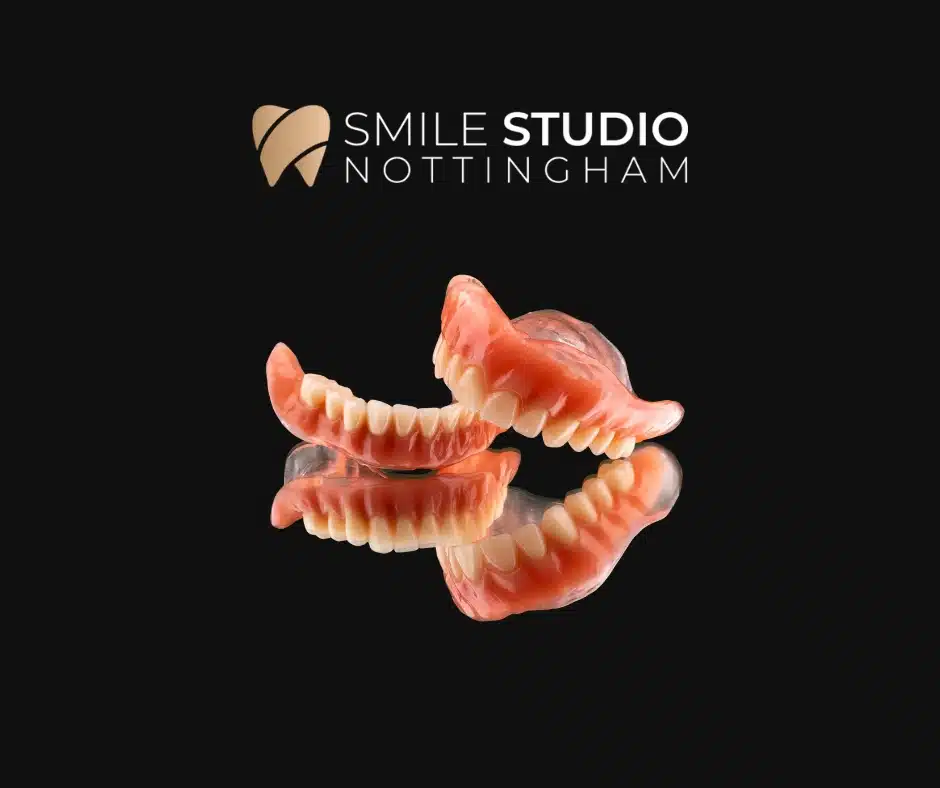
Compare acrylic, chrome, flexible, immediate, suction and implant-retained dentures, with costs, pros, limitations, appointments and maintenance.
What types of dentures are available?
Complete denture comparison table
| Type | Best considered when | Advantages | Limitations | Maintenance |
|---|---|---|---|---|
| Full acrylic | All teeth missing in an arch | Adaptable, supports lips and cheeks | Can move, especially lower jaw | Daily cleaning, reviews, relines |
| Partial acrylic | Several gaps and budget matters | Can add teeth later in some cases | May be bulkier | Clean around clasps and teeth |
| Cobalt chrome | Strong suitable teeth remain | Thin, rigid and strong | More complex design and cost | Excellent cleaning around supports |
| Flexible partial | Selected aesthetic partial cases | Discreet, no visible metal in many designs | Harder to adjust or reline | Use material-specific cleaning advice |
| Immediate | Teeth are being extracted | Avoids a visible toothless period | Fit changes during healing | Adjustments and later reline likely |
| Suction | Selected full-denture anatomy | Focuses on seal and stability | Not suitable for every mouth | Review seal and tissue health |
| Implant-retained | More stability is required | Improved retention and chewing confidence | Surgery, cost and component maintenance | Clean implants and attachments daily |
How a dentist chooses between them
Remaining teeth
Number, position, gum support and prognosis determine whether clasps or rests are possible.
Bone and soft tissue
Ridge shape, saliva, muscle attachments and gag reflex affect retention.
Bite and space
The distance between jaws and bite forces influence material thickness and strength.
Appearance
Tooth shade, gum colour, smile line and visible clasps are considered.
Dexterity
The patient must be able to insert, remove and clean the chosen design safely.
Future changes
Where more teeth may be lost, adjustability can matter.
Consultation and appointment process
Examination and options
The mouth, bite, current denture and remaining teeth are assessed. X-rays may be needed.
Impressions or scans
Records capture the supporting tissues and teeth.
Design and bite
The framework, clasps, tooth position and jaw relationship are planned.
Try-in and fit
Appearance and bite may be checked before processing, followed by final fitting and adjustments.
Eating, care and lifespan
Start with softer foods and balanced chewing. Clean dentures morning and evening, rinse after meals and clean natural teeth and gums. Most dentures last for years, but changing gums, worn teeth and altered bite can make earlier replacement appropriate.
Costs, finance and NHS choices
Smile Studio’s published fees range from £600 for a 1 to 3 tooth acrylic denture to £2,600 for a suction denture, with flexible partial dentures at £1,300. Implant-retained dentures start from £2,000. NHS dentures may be available when clinically necessary, but private treatment can offer additional material or aesthetic choices.
Common misconceptions
| Claim | Clinical reality |
|---|---|
| Flexible dentures are always the most comfortable | They suit selected cases but are not automatically best for every bite or gap. |
| Chrome dentures damage teeth | A correctly designed framework can distribute forces well, but supporting teeth must be healthy and maintained. |
| Immediate dentures are the final result | Healing changes the gums, so relining or replacement may be required. |
| Implant dentures never need repair | Attachments, teeth and bases still wear and need maintenance. |
Key takeaways
- Denture names describe both extent and material, so categories can overlap.
- Chrome is strong and slim, flexible can be discreet, and acrylic is adaptable.
- Immediate dentures manage the extraction period but commonly need later changes.
- Implant retention improves stability but adds surgery and maintenance.
- A clinical examination is the only reliable way to choose.
Frequently asked questions
What is the most natural-looking type of denture?
Natural appearance depends on tooth selection, arrangement, gum characterisation, fit and facial support, not only the base material.
Are chrome dentures better than acrylic?
Chrome can be thinner and stronger, while acrylic is often easier to modify. Suitability depends on the supporting teeth and design.
Are flexible dentures suitable for everyone?
No. They can work well in selected partial cases but may not be ideal where rigid support, major adjustment or future additions are expected.
What is a suction denture?
A suction denture is a full denture designed to maximise the peripheral seal and retention where anatomy allows.
Can dentures be fixed permanently?
Conventional dentures are removable. Implants can retain a removable denture or support a fixed bridge.
How many appointments are needed?
A conventional denture often needs 4 to 6 visits, while immediate and implant-supported designs vary.
Related Smile Studio treatments and guides
Sources used for this guide
- NHS: Dentures
- NHS: Dental treatments and NHS availability
- NHS: Services available on the NHS
- Smile Studio: Dentures in Arnold, Nottingham
- Smile Studio: Pricing
External links are provided for general patient information. They do not replace advice from a dentist who has examined you.
Get a personalised assessment in Nottingham.
Smile Studio is at 152-156 Front Street, Arnold, Nottingham, NG5 7EG, with an on-site dental laboratory and Saturday appointments.